
Texas A&M University-San Antonio has expanded its chemistry program with the addition of three new faculty members, who plan to use their expertise to bring innovation to teaching and research.
Their arrival highlights the university’s efforts to strengthen STEM education and create more opportunities for student research.
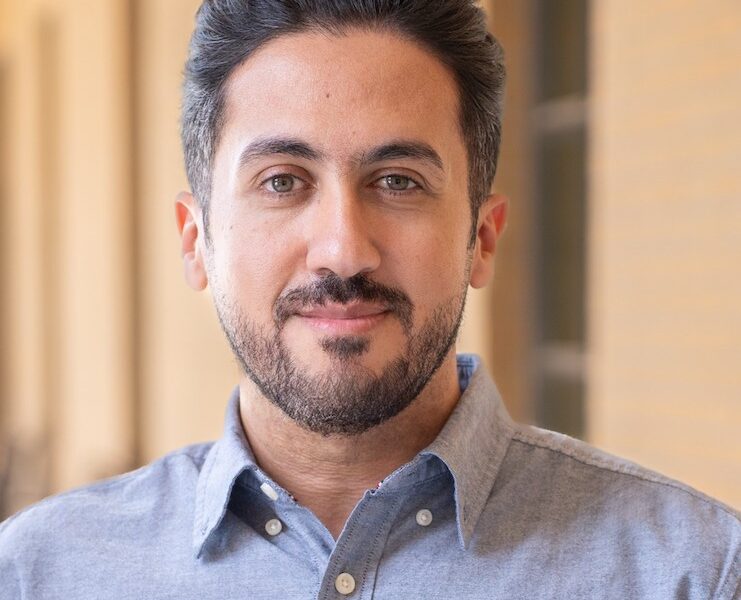
Mohamed Hassan, assistant professor of chemistry, brings his expertise from the University of Pennsylvania. His interest in A&M-San Antonio grew after realizing the values the school is built on and the potential the chemistry program has to offer.
“I applied to different schools, but I like the values the department and the university is standing by and want to achieve,” Hassan said.
“I see the vision for this school is big and I want to be a part of it,” he said.
Hassan believes that to create this vision the students must feel encouraged and professors should show them how chemistry is more than a core course.
“I want to bring the students enthusiasm and encouragement,” Hassan said. “The way we should encourage them is by showing what all they can achieve with a degree in chemistry.”
He acknowledges that many students are unsure how their degree will align with their careers, so he sees it as his responsibility to show them the possibilities.
“I think it’s my duty to show them this is what you can achieve with a degree of chemistry or any degree in the STEM field,” Hassan said.
“The way I usually do it in class is by showing them what are the state-of-the-art accomplishments in science and the most recent discoveries.”
As an example, Hassan highlighted how chemist Omar Yaghi used his knowledge in chemistry to obtain the 2025 Nobel Prize in the field of metal-organic frameworks (MOFs).

Like Hassan, Sambuddha Banerjee also sees A&M–San Antonio as a place where new ideas can thrive.
Banerjee, an instructional assistant professor, joined the program after teaching at East Carolina University.
“San Antonio A&M is new, and it is a vibrant situation to be in because it allows us to create the culture, which includes the way we learn and the curriculum we give out,” Banerjee said.
He described how this opportunity is rare at long-established institutions.
“The university I was at before was older and it made it difficult to bring change, as in here a lot of ideas can be implemented a lot more easily which is why I wanted to move here,” he said.
Banerjee plans to introduce a new approach to labs, moving away from the “cookbook” method and toward more immersive experiences.
“When I first got this position, I was actually thinking the first semester I would teach using a cookbook type lab. However, the chair of the department encouraged me to teach it as a research lab, which is very new.”
The research labs are also known as CURE labs, course-based undergraduate research labs. The labs allow students to participate in original research where the outcomes are unknown but meaningful to our community. In contrast, the cookbook method requires following a step by step process where results are premeditated.
Banerjee emphasized that CURE labs give undergraduate students access to research methods and experiences they might not have had otherwise.
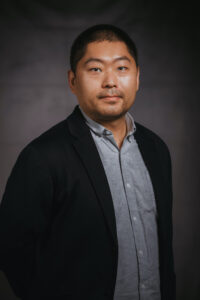
This growth and innovation also attracted Yulun Han, an assistant professor in chemistry, whose talents derive from North Dakota State University.
“The university is in a dynamic stage of expansion, and I saw a meaningful opportunity to contribute to building the chemistry program from the ground up,” Han said.
Han sees the small size of the chemistry program as an opportunity rather than a limitation.
“My short-term goal is to help expand our chemistry program and work toward accreditation from the American Chemical Society. In the long term, I hope to see a graduate program in chemistry established here.”
Currently, A&M-San Antonio offers a Bachelor of Arts in Chemistry. Han plans to advocate for graduates seeking to further their experience in this field, all while making efforts to connect with the American Chemical Society (ACS).
Connecting with the ACS would not only bring more attention to the chemistry program, but it would also provide students with a competitive advantage for graduate school admissions and employment.
“As a faculty member, I aim to foster a strong culture of research and hands-on learning for students, providing opportunities that prepare them for both graduate school and industry careers,” he said.
To support this, Han includes undergraduate students in his research labs, which focus on studying molecules and their reactions under extreme temperatures to identify key reaction pathways.
“I involve undergraduate students in this research so they can experience real scientific discovery firsthand. My objective is to build their skills in critical thinking, problem solving, and research communication, preparing them for successful careers in STEM.”
For more information about research Hassan offers, email Mhassan@tamusa.edu.
For details on Banerjee’s labs, email sbanerjee@tamusa.edu.
For information about Han’s research, email yhan@tamusa.edu.